
Search Engine Optimization—better known as SEO—has become the foundation of online success in today’s digital landscape. As the internet grows more competitive each day, standing out requires more than just a good idea or a well-designed website. You need a strategic approach that ensures people can actually find you. With most online interactions beginning with a simple search, mastering SEO is essential for capturing attention.
Effective SEO helps search engines understand your content, connect it to user intent, and place it in front of the right audience at the right moment. It’s not just about ranking higher; it’s about increasing visibility, building trust, and inspiring users to take action. From keywords and content structure to backlinks and technical optimization, every element plays a crucial role.
In a world where 93% of digital experiences start with a search engine, prioritizing SEO is no longer optional. It’s a fundamental tool for growth, relevance, and long-term online survival.
What Is SEO ?
SEO (Search Engine Optimization) is the practice of enhancing a website so it appears higher on major search platforms like Google, Bing, and even YouTube. When your site is optimized correctly, search engines can easily understand your content and match it with what users are looking for, giving you a clear competitive advantage. This makes SEO one of the most valuable tools for building long-term digital visibility.
Every time someone searches for a query—such as “best laptop for students”—search engines rapidly scan billions of pages to deliver the most relevant answer. Strong SEO ensures that your website appears before your competitors, increasing your chances of earning more clicks, generating more leads, and ultimately boosting sales. It’s the digital equivalent of putting your brand directly in front of people who already need what you offer.
Think of SEO as prime online real estate. Ranking on page one is like owning a storefront on the busiest street in the world—high traffic, high trust, and endless opportunity.
Why SEO Matters More Than Ever ?
SEO has evolved dramatically over the past decade, but here’s why it’s still king:
✔ 70–80% of users ignore paid ads
- People trust organic search results more than ads.
✔ SEO traffic is FREE and long-lasting
- Unlike ads, SEO traffic doesn’t disappear when you stop paying.
✔ SEO builds brand authority
- Top-ranking sites automatically become “trustworthy” in the eyes of users.
✔ SEO boosts conversions
- Search intent leads to better-qualified customers.
✔ Voice search + AI assistants rely heavily on SEO
- As natural-language queries grow, SEO becomes even more crucial.
How Search Engines Really Work
Search engines use three major processes:
Crawling: This is the very first step where automated bots—often referred to as spiders—move across the internet, scanning millions of web pages. Their job is to discover new content, updated pages, and fresh links so search engines always know what exists online.
Indexing: Once a page is found, Google saves it in its massive database. During this stage, the search engine carefully examines your page’s text, images, structure, internal links, and overall user experience. If your page is not indexed, it simply cannot appear in search results.
Ranking: After indexing, Google evaluates your page using more than 200 ranking signals to determine where it should appear in search results. These include factors like content quality, backlinks, keyword relevance, mobile friendliness, page speed, and user behavior such as bounce rate and dwell time.
- Google evaluates your page using 200+ ranking signals
- Content quality and depth
- Backlinks from trusted, relevant websites
- Keyword usage and topical relevance
- Mobile friendliness and responsive design
- Fast page loading speed
- Positive user behavior (low bounce rate, higher dwell time)
- Overall site authority and trustworthiness
Understanding these mechanics helps you optimize effectively.
The 3 Types of SEO (Full Breakdown)
Here’s a quick reference table that breaks everything down:
Table 1: Types of Search Engine Optimization and What They Involve
| SEO Type | Key Focus Areas | Tools Used | Impact Level |
|---|---|---|---|
| On-Page SEO | Keywords, content, headings, images, internal links | Yoast, SurferSEO | High |
| Off-Page SEO | Backlinks, social signals, brand mentions | Ahrefs, Semrush | Very High |
| Technical SEO | Speed, mobile optimization, sitemap, robots.txt | Screaming Frog | Critical |
Let’s briefly explore each.
✔ On-Page SEO
- This includes keyword optimization, engaging content, internal linking, and HTML structure.
✔ Off-Page SEO
- Primarily about backlinks—the biggest ranking factor after content.
✔ Technical SEO
- A site must be fast, clean, secure (HTTPS), and mobile-friendly to rank well.
Critical SEO Ranking Factors in 2025

Google updates are becoming more focused on:
E-E-A-T (Experience, Expertise, Authoritativeness, Trustworthiness): In modern SEO, proving your credibility is non-negotiable. Google wants to rank content created by people who demonstrate real experience, genuine expertise, strong authority, and trustworthy information. The more you showcase real knowledge, citations, transparency, and authenticity, the higher your page can perform in SEO.
Search Intent: One of the strongest foundations of SEO is understanding what the user truly wants. Google prioritizes pages that precisely match the purpose behind a search—whether it’s informational, commercial, transactional, or navigational. If your content aligns perfectly with user intent, your chances of outranking competitors increase dramatically.
AI Content Quality: AI-generated content is acceptable in SEO, but only when it is verified, edited, accurate, and genuinely helpful. Low-effort AI text won’t rank. Google rewards content that adds value, answers questions thoroughly, and demonstrates reliability.
Page Experience: A smooth, user-friendly page experience is essential for strong SEO performance. Fast loading speeds, stable layouts, clean design, and minimal intrusive ads all help keep users engaged and satisfied.
Backlinks: Backlinks remain one of the most powerful ranking factors in SEO. Links from reputable, relevant websites signal trust and authority, boosting your site’s credibility.
Content Depth & Topical Authority: Google prefers content that covers a topic deeply rather than superficially. Building topical authority is a long-term SEO strategy that shows search engines you are a true expert in your niche.
Engagement Metrics: Higher dwell time and lower bounce rates act as strong indicators of user satisfaction. When visitors stay longer, Google recognizes that your page is valuable—helping push your SEO rankings even highe
The Complete SEO Strategy Framework
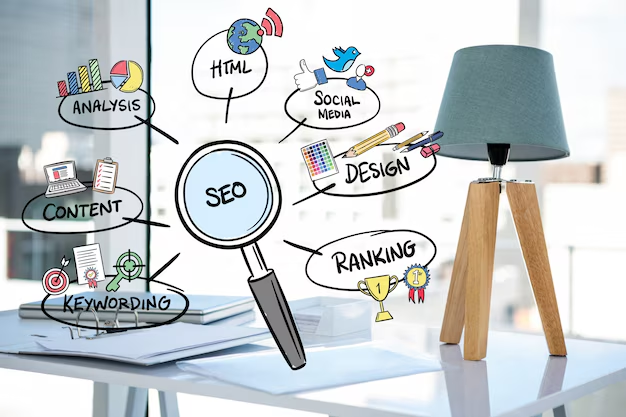
Here’s the full actionable framework used by top marketers:
A. Keyword Research
Find keywords based on:
- Search volume
- User intent
- Competition level
- SERP analysis
Tools to use:
- Google Keyword Planner
- Semrush
- Ahrefs
- Ubersuggest
B. Creating High-Quality, Engaging Content
Your content must be:
- In-depth
- Skimmable
- Helpful
- Visually appealing
- Optimized with keywords naturally
Use the 80/20 rule:
80% helpfulness, 20% optimization.
C. On-Page SEO Checklist
- Optimize title tag (include main keyword)
- Use an H1 with keyword
- Perfect meta description
- Use H2/H3 subheadings
- Add internal links
- Add outbound authoritative links
- Optimize image alt text
- Improve readability
- Add FAQ section with structured data
D. Technical SEO
- Improve page speed (use WebP images)
- Use mobile-first design
- Add SSL (HTTPS)
- Generate sitemap.xml
- Fix crawl errors in Google Search Console
- Reduce unused JavaScript
- Enable caching
E. Off-Page SEO: Backlinks
- Strategies that work in 2025:
- Guest posting
- Digital PR
- Broken link building
- Podcast interviews
- Creating linkable assets (tools, guides, statistics)
Quality > Quantity.
SEO Tools You Must Use
Here’s another useful table:
Table 2: Top SEO Tools and Their Uses
| Tool | Best For | Price |
|---|---|---|
| Google Search Console | Indexing, performance tracking | Free |
| Google Analytics | Traffic insights | Free |
| Ahrefs | Backlink research, keyword analysis | Paid |
| Semrush | Full SEO suite | Paid |
| Yoast / RankMath | On-page SEO optimization | Free/Paid |
| Screaming Frog | Technical audits | Free/Paid |
Case Study: SEO Traffic Boost Example
Below is a fictional case study for illustration.
A website applied SEO improvements over 6 months:
Traffic Growth Over 6 Months
| Month | Organic Visitors |
|---|---|
| January | 1,200 |
| February | 1,800 |
| March | 3,200 |
| April | 5,000 |
| May | 7,800 |
| June | 10,500 |
Bar Graph: Organic Traffic Growth
Organic Traffic Growth (Visitors)

Jan   | ████ 1.2k
Feb   | ██████ 1.8k
Mar   | ██████████ 3.2k
Apr   | ███████████████ 5k
May   | ██████████████████████ 7.8k
Jun   | █████████████████████████████ 10.5k
This shows a 775% increase in visitors due to consistent SEO optimization.
SEO Challenges & Future Trends
SEO is powerful but comes with challenges:
- Constant Google Algorithm Updates: Google rolls out thousands of algorithm changes every single year, and each one can influence how websites rank. For anyone working on SEO, staying updated is essential because what works today may not work tomorrow. These continuous updates force creators to focus on high-quality content, strong technical foundations, and user-first optimization.
- AI-Generated Content Flood: With AI tools becoming widely accessible, the internet is flooded with automated content. This has made competition tougher than ever. In modern SEO, only high-quality, accurate, and well-edited content truly stands out. Google is prioritizing genuine value, originality, and trust over mass-produced, low-quality AI text.
- Zero-Click Searches: More searches are ending without users clicking any website because Google often provides direct answers on the results page. To survive in this environment, SEO strategies must focus on brand visibility, structured data, and content that still attracts clicks despite Google’s instant answers.
- Voice Search and Conversational AI: Search behavior is evolving as people use voice assistants and natural, conversational queries. Effective SEO now requires optimizing for longer, human-like phrases, question-based keywords, and context-rich answers that reflect real speech patterns.
- Increased Importance of UX: User experience has become a major ranking influence. Fast-loading pages, clean layouts, intuitive navigation, and smooth interactions all signal to search engines that your site is trustworthy and user-friendly. A strong UX not only boosts engagement but also improves overall Search Engine Optimization performance.
Future SEO Trends
AI-Assisted Ranking: As Google evolves, artificial intelligence is becoming a core part of how search results are determined. Future SEO will rely heavily on AI systems that analyze user behavior far more deeply than before—tracking satisfaction, interaction patterns, search refinement, and dwell time. This means rankings will increasingly favor pages that deliver real value and keep users engaged.
Video SEO Surge: Video content is exploding, and platforms like YouTube and TikTok are becoming powerful search engines in their own right. Modern Search Engine Optimization now requires optimizing titles, descriptions, transcripts, and engagement signals specifically for video platforms. Brands that master video visibility will dominate, as users increasingly prefer watching over reading.
Search Personalization: Search results are no longer the same for everyone. Google customizes results based on individual behavior, past searches, interests, and browsing patterns. This shift means Search Engine Optimization strategies must consider user intent at a deeper level and create content that appeals to personalized search journeys.
First-Hand Experience Signals: Google is placing growing emphasis on content created from real, verifiable experience. First-hand insights, practical demonstrations, and lived expertise are becoming major ranking factors. SEO now rewards authenticity over theory, pushing creators to share genuine knowledge rather than generic explanations.
Semantic Search: Search engines are moving beyond simple keywords and focusing on meaning, context, and relationships between topics. This evolution means SEO must prioritize natural language, in-depth explanations, and content that answers multiple layers of a user’s question. Semantic search helps Google understand what users truly need—even if they phrase it differently.
Conclusion
SEO is far from dead—in fact, it’s evolving faster than ever and becoming even more essential for long-term digital success. Instead of slowing down, Search Engine Optimization is becoming more advanced, more competitive, and far more rewarding for those who understand how to use it. As search engines grow smarter, the brands and creators who adapt will gain more visibility than ever before.
Whether you’re a blogger, business owner, marketer, or entrepreneur, mastering Search Engine Optimization in 2025 requires a deeper, more strategic approach. This means producing high-value content that genuinely helps users, optimizing every page to match precise search intent, building a strong network of authoritative backlinks, and maintaining flawless technical performance. It also demands the ability to evolve continuously alongside Google’s constant updates and shifting algorithm priorities.
If you begin implementing the strategies outlined in this guide today, you’ll experience steady improvements in your website’s traffic, lead generation, and overall revenue. With consistent effort and smart Search Engine Optimization practices, your growth will compound month after month.
